
Sustainable Living
How Much Is Bottled Water Really Costing You?
Oct
How Much Is Bottled Water Really Costing You?
Buying a bottle of water can feel insignificant.
£1 here. £1.50 there.
But when bottled water becomes part of your everyday routine, the cost can build surprisingly quickly. And the price at the checkout is only one part of the story.
There is also the plastic bottle itself, the environmental cost of producing and transporting billions of single-use containers, and growing scientific interest in the microplastics and nanoplastics detected in bottled water.
For households that regularly buy bottled water, it may be worth asking a simple question:
Would filtering your drinking water at home make more sense?
Bottled water can become an expensive habit
The cost of bottled water varies significantly depending on how you buy it.
Supermarket multipacks can be relatively inexpensive, while individual bottles bought at convenience stores, gyms, cafés, stations and while travelling are often considerably more expensive.
That difference matters.
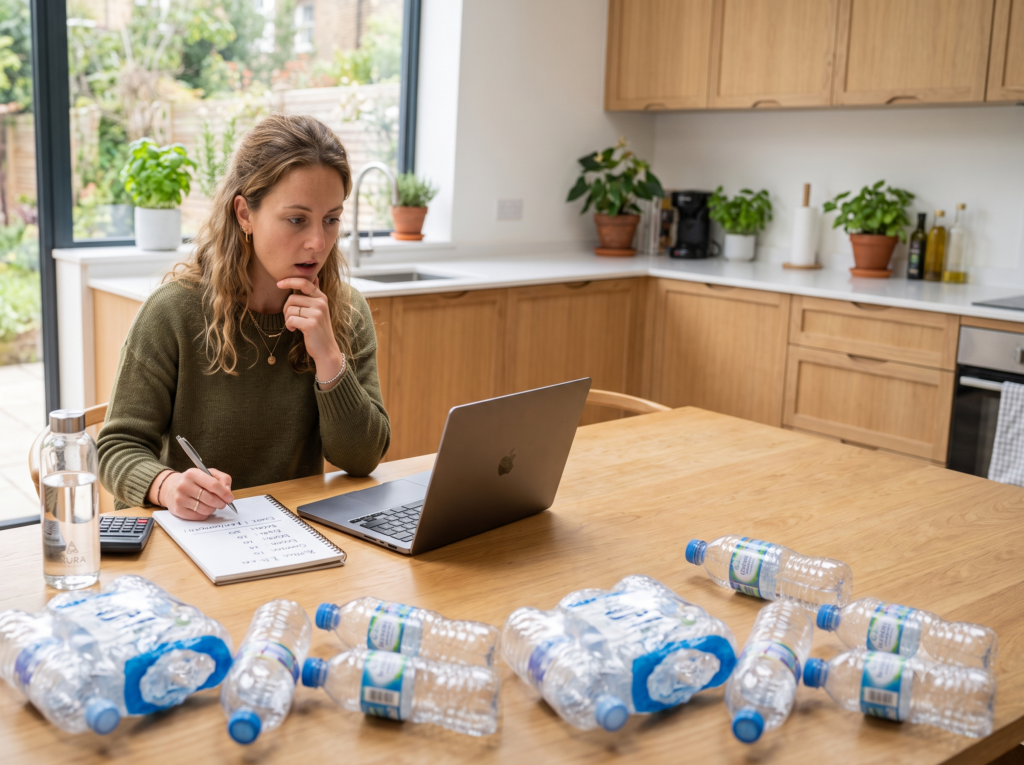
If you regularly buy two £1 bottles per day:
£1 × 2 bottles × 365 days = £730 per year
At £1.50 per bottle:
£1.50 × 2 × 365 = £1,095 per year
Even one £1 bottle every working day can amount to around £260 per year.
Not everybody will spend this much. Someone buying large supermarket multipacks may spend far less.
But for families who frequently buy bottles while travelling, at school, at work, at the gym or simply because they prefer bottled water at home, the annual cost can easily become hundreds of pounds.
And unlike an appliance or household system, bottled water is a recurring expense.
Once the bottle is empty, you have to buy another one.
Then there is the amount of plastic we use
The environmental impact extends far beyond the household budget.
UK government figures estimate that consumers purchase around 12 billion single-use plastic drinks bottles every year. Current collection rates across drinks containers are estimated at around 70–75%, meaning substantial quantities still end up as waste, litter or landfill. GOV.UK
London City Hall separately reports that around 7.7 billion plastic bottles are purchased across the UK each year, with the average London adult buying more than three plastic water bottles every week. London City Hall
The UK is now introducing a Deposit Return Scheme from October 2027 specifically to increase recycling of single-use drinks containers and reduce litter. GOV.UK
Recycling helps, but recycling is not the same as avoiding the packaging in the first place.
Every disposable bottle still needs to be manufactured, filled, transported, stored, refrigerated in some cases, collected and processed after use.
Using a reusable bottle filled at home removes much of that repeated packaging cycle.
Bottled water is not simply “water in a bottle”
Plastic waste is visible.
What is much harder to see is what researchers are finding inside bottled water itself.
Scientific research over recent years has repeatedly detected microplastics and nanoplastics in bottled drinking water.
Microplastics are tiny plastic particles. Nanoplastics are even smaller, so small that they are measured on a microscopic scale and are considerably harder to detect using traditional testing methods.
A widely reported 2024 study found an average of approximately 240,000 detectable plastic particles per litre across three bottled-water brands tested using an advanced imaging technique.
Most of those particles were nanoplastics.
The result does not mean every litre of bottled water in the UK contains exactly 240,000 particles. Different brands, bottles and testing techniques can produce different results.
But it demonstrates an important point:
Bottled water is not automatically free from plastic particles.
Could regular bottled-water drinking increase microplastic exposure?
Research increasingly suggests that it can.
A 2025 scientific review examining more than 140 studies reported that bottled-water consumers may ingest substantially more microplastic particles than people primarily drinking tap water. The review cited estimates suggesting bottled-water consumption could contribute up to around 90,000 additional particles per year compared with tap-water consumption, although exposure estimates vary significantly depending on the studies and measurement techniques used. PubMed
That does not mean bottled water should be treated as toxic.
It does mean that drinking bottled water may represent one avoidable route of microplastic exposure.
Why are scientists concerned about microplastics?
This is where it is important to separate what is already known from what researchers are still investigating.
Microplastics and nanoplastics have now been detected in a range of human tissues and body fluids.
Research reviewed in 2025 has reported plastic particles in areas including blood, the liver, kidneys and other tissues. Laboratory and animal studies have associated exposure with mechanisms including oxidative stress, inflammation, changes in immune function and cellular damage. Nature
Researchers are also studying possible associations with reproductive, cardiovascular, gastrointestinal and neurological effects. PubMed
However, there is still an important scientific limitation:
We do not yet have a clearly established safe or unsafe level of microplastic exposure from drinking water.
Long-term human studies are still developing.
So it would be inaccurate to say that drinking bottled water is proven to cause a particular disease.
What we can say is that:
microplastics are present in our environment and food supply, bottled water can contribute to exposure, and scientists are actively investigating the potential health consequences of long-term exposure.
For many people, reducing avoidable exposure is therefore a reasonable consideration.
What about the plastic bottle itself?
The bottle can also contribute to the issue.
Most disposable water bottles are made from PET plastic, while caps and other components can use different polymers.
Particles can potentially enter bottled water during manufacturing, bottling, transport, storage and through contact with the packaging itself.
Heat, physical stress, sunlight and storage conditions are also areas researchers continue to investigate.
This is one reason the conversation around bottled water has shifted.
It is no longer simply:
“Is bottled water clean?”
It is also:
“Why repeatedly store drinking water in single-use plastic if there is another option?”
Does bottled water mean purer water?
Not necessarily.
Many people associate bottled water with purity, particularly when compared with ordinary tap water.
But bottled mineral and spring waters naturally contain dissolved minerals and salts.
That means testing bottled water with a TDS meter may produce readings above 100 ppm, and sometimes considerably higher.
TDS stands for Total Dissolved Solids.
A higher TDS reading does not necessarily mean the water simply contains more beneficial minerals.
A reading above 100 ppm may reflect naturally occurring minerals such as calcium, magnesium, sodium, potassium, bicarbonates, chlorides and sulphates. But a TDS meter cannot tell you exactly what those dissolved solids are.
Some dissolved contaminants can also contribute to a TDS reading, while other potential contaminants, including bacteria, microplastics and certain organic compounds, may be present without being reflected accurately in the TDS number at all.
To know exactly what is in the water, specific laboratory testing is required.
The more relevant point is this:
Buying water in a bottle does not necessarily mean you are buying highly purified water.
What does reverse osmosis do differently?
A reverse osmosis system treats water at the point of use.
Rather than repeatedly purchasing packaged drinking water, household water passes through several filtration stages before it reaches your drinking-water tap.
The central stage is an RO membrane designed to reduce a wide range of dissolved substances and very small particles.
Research from large-scale reverse-osmosis drinking-water treatment has also demonstrated substantial removal of microplastics. A 2025 study of two seawater RO plants reported that the reverse-osmosis stage removed more than 97% of measured microplastics in the systems studied. ScienceDirect
That does not mean every domestic RO system should be advertised as removing exactly 97% of microplastics; performance depends on the system, membrane, particle sizes, condition and operating environment.
But membrane filtration and reverse osmosis are established technologies for significantly reducing contaminants and particles in water.
One system instead of hundreds of bottles
This is where the comparison becomes much more practical.
Imagine a person buying two bottled waters every day.
Over one year, that could mean:
730 individual bottles.
At £1 each:
£730 spent.
For a two-person household following the same habit:
1,460 bottles and £1,460 per year.
For a family of four:
2,920 bottles and £2,920 per year.
Those figures assume individual £1 bottles, so actual spending will vary considerably.
But they demonstrate why comparing bottled-water spending with the cost of a home filtration system can be worthwhile.
Instead of repeatedly paying for packaging, transport and another disposable bottle, you invest in producing filtered drinking water directly at home.
There is also the convenience factor
The financial calculation is only part of it.
Regular bottled-water users also have to:
- carry bottles home,
- find somewhere to store them,
- remember to buy more,
- dispose of the empty bottles,
- and repeat the process every week.
With a point-of-use filtration system, drinking water is available directly from your own kitchen.
- Fill a reusable bottle before leaving home.
- Fill the children’s bottles before school.
- Fill a bottle before going to the gym.
- Fill your glass while cooking.
- No multipacks to carry.
- No cupboard full of plastic bottles.
- No running out.
What if you already recycle every bottle?
Recycling is clearly better than throwing bottles into general waste or allowing them to become litter.
But reducing single-use packaging in the first place is still preferable from a resource perspective.
That distinction is reflected in the UK’s wider move toward a more circular economy, including extended producer responsibility and the incoming Deposit Return Scheme. GOV.UK
A reusable bottle that is filled hundreds of times avoids the need for hundreds of individual containers.
For households consuming bottled water every day, that difference becomes substantial.
So is it time to rethink bottled water?
Bottled water has its place.
It is useful when travelling, during emergencies and whenever safe drinking water is not readily available.
But using disposable bottled water as the main source of drinking water at home is a different question.
If you’re buying bottled water because you want water that tastes better, contains fewer dissolved substances or simply gives you greater control over what your family drinks, there may be a more practical solution.
A properly maintained home water-filtration system allows you to treat the water where you actually use it.
That can mean:
- less reliance on disposable plastic bottles
- fewer bottles to carry and store
- less household plastic waste
- potentially hundreds of pounds less spent on individual bottles
- filtered drinking water available whenever you need it
And perhaps most importantly:
you stop buying the same thing again every time the bottle becomes empty.
£1 doesn’t feel expensive. Until you multiply it.
One bottle on the school run.
One at lunch.
One at the gym.
A couple while you’re travelling.
It doesn’t feel like much.
But:
2 × £1 bottles per day
becomes
£60 every 30 days
and
£730 every year.
Along with as many as:
730 single-use bottles.
The question may not be:
“Can I afford a water filtration system?”
It may be:
“How much am I already spending on water?”
Ready to rethink bottled water?
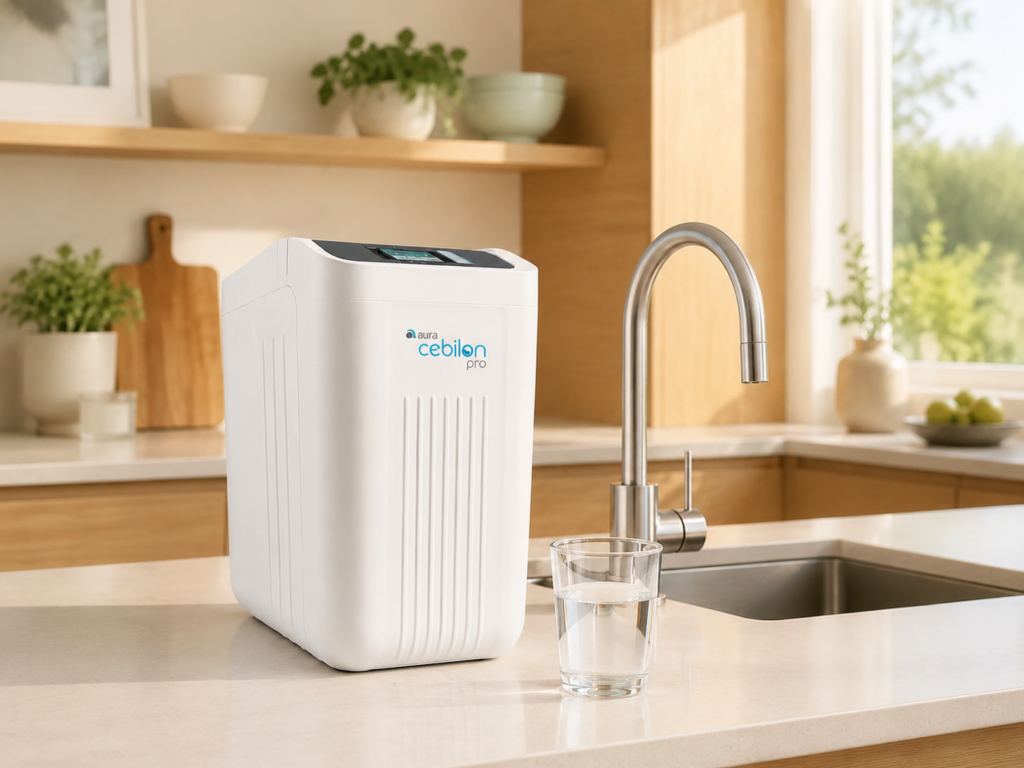
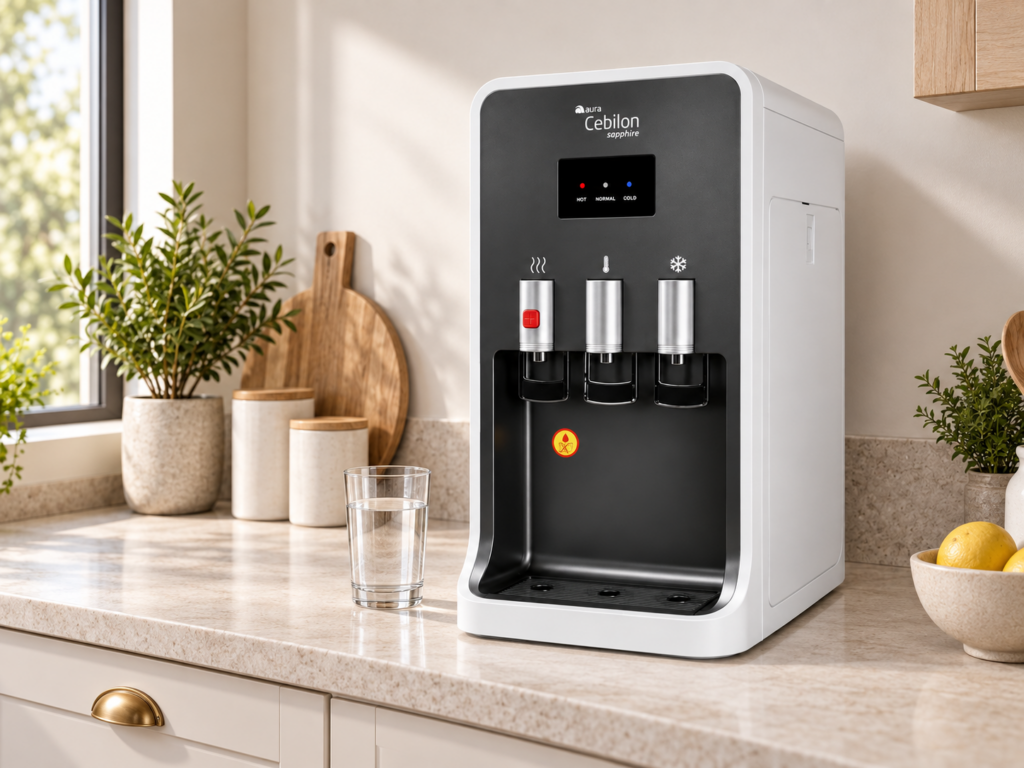
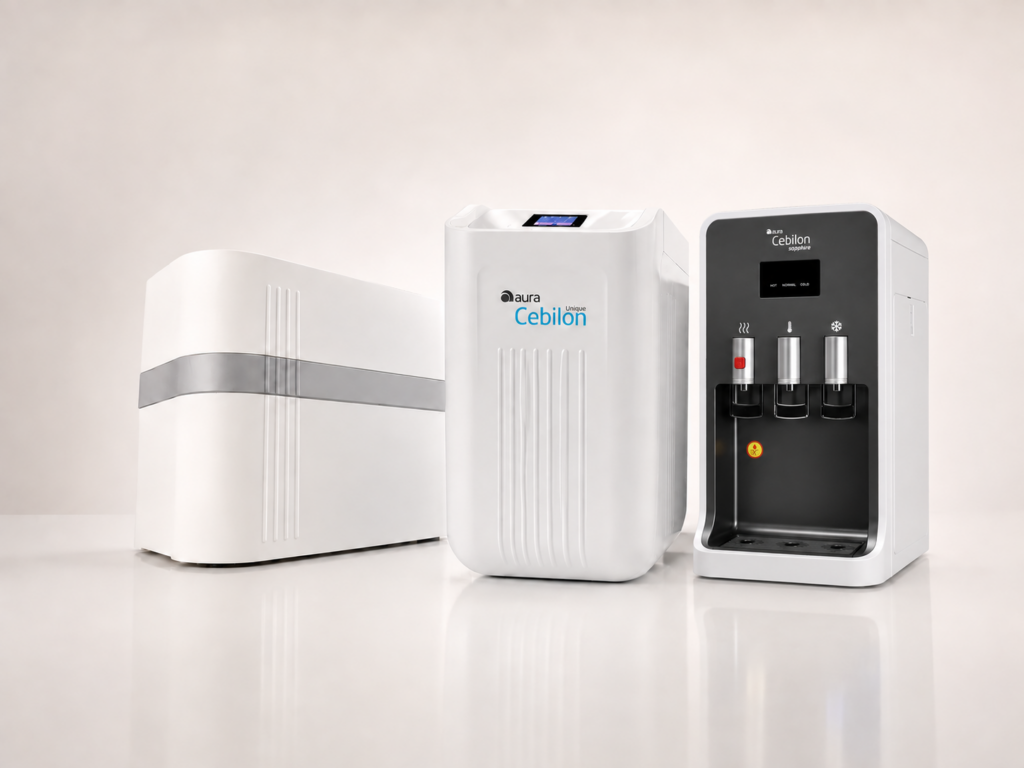
At Aura Homewell, our Cebilon reverse-osmosis systems provide filtered drinking water directly from your home.
Instead of continually buying, carrying and disposing of bottled water, you can fill your glass or reusable bottle directly from your own filtered-water supply.
Explore Aura Cebilon water purification systems
or
Book a free home water demonstration and see the difference for yourself.