
Wellbeing
What’s in Your Kitchen Tap? A Parent’s Guide to Family Hydration

Oct
What’s in Your Kitchen Tap? A Parent’s Guide to Family Hydration
As parents, we pay close attention to what our children consume, from checking food labels for hidden sugars to choosing organic produce where possible. However, when it comes to the water used to fill a beaker, mix morning porridge, or make up infant formula, we often assume tap water is completely pure.
While public water suppliers across the UK meet strict statutory safety standards at the treatment plant, water must travel through miles of aging infrastructure and domestic plumbing before reaching your glass. For growing families, understanding what enters the home via the mains supply is an essential part of day-to-day wellness.
Why Young Bodies Require Extra Care
Children consume significantly more water per kilogram of body weight than adults, meaning their relative exposure to trace compounds in drinking water is proportionally higher. Their developing organs and metabolic systems also process minerals and chemical compounds differently:
- Lead in Pre-1970 Plumbing: Lead piping was officially banned in UK building regulations in 1969. However, official guidance from the Drinking Water Inspectorate (DWI) confirms that homes built before 1970 may still have underground lead supply pipes or copper pipes joined with lead solder. The World Health Organization (WHO) notes that lead accumulates in the body over time, making it particularly important to minimise exposure in infants and young children.
- Residual Chlorine & Taste: Water utility companies treat mains supplies with chlorine to eliminate harmful bacteria during transit through the network. While essential for public sanitation, lingering chlorine leaves a distinct taste and odour that often deters children from drinking plain water, leading parents to rely on sugary squashes instead.
Why Bottled Water Isn’t the Solution
Switching to bottled water for everyday family hydration introduces its own challenges and restrictions:
- Strict Mineral Thresholds for Infants: Official NHS guidance on infant feeding warns that many commercial bottled mineral waters are unsuitable for preparing infant formula or hydrating babies. Bottled water can contain elevated levels of sodium (which must remain below 200 mg/L) or sulphate (which must remain below 250 mg/L), both of which can strain an infant’s developing kidneys.
- The Limitations of Boiling: While boiling tap water effectively kills biological pathogens like bacteria and viruses, it does not remove dissolved heavy metals, nitrates, or chemical residues. As steam evaporates during boiling, the concentration of these dissolved compounds actually increases in the remaining liquid.
The Role of Reverse Osmosis (RO) Filtration
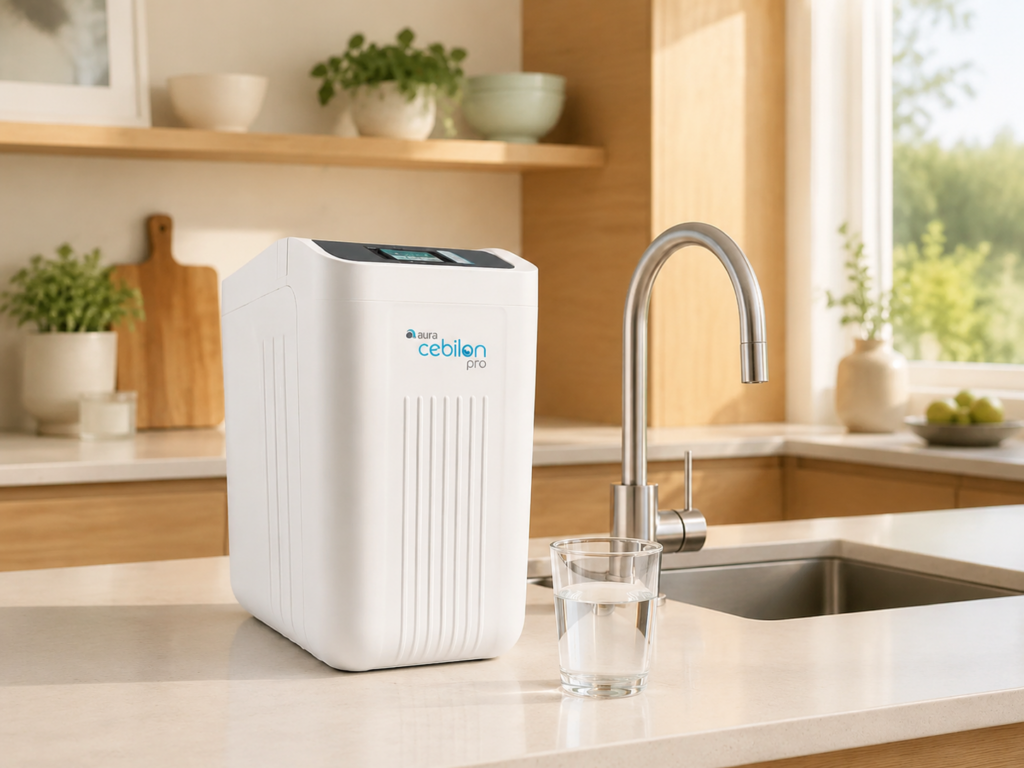
To secure high-purity water directly at the kitchen tap, without generating plastic waste or relying on temporary jug filters, many UK households install multi-stage Reverse Osmosis (RO) systems.
Unlike standard carbon filters that primarily address taste and odour, Reverse Osmosis forces mains water under pressure through a semi-permeable membrane with microscopic pores down to 0.0001 microns.
- Targeted Filtration: Reduces dissolved heavy metals (including lead), chemical residues, nitrates, microplastics, and chlorine by up to 99%.
- Improved Natural Taste: Removes harsh disinfection odours, providing clean, fresh-tasting water that encourages children to drink more plain water throughout the day.
- On-Demand Convenience: Delivers pure water straight from a dedicated tap, eliminating the ongoing cost and environmental impact of single-use bottled water.
Ensuring your family has access to pure, clean hydration isn’t about worry—it’s about making practical, informed choices for your home. Upgrading your drinking water is one of the simplest steps you can take to safeguard your family’s daily health.